Told by Lars Sommer
The Smithy - the neighbour across the pond
My family has lived in the smithy next to Vægtergården for six generations. On 5 October 2026 we moved across the pond.
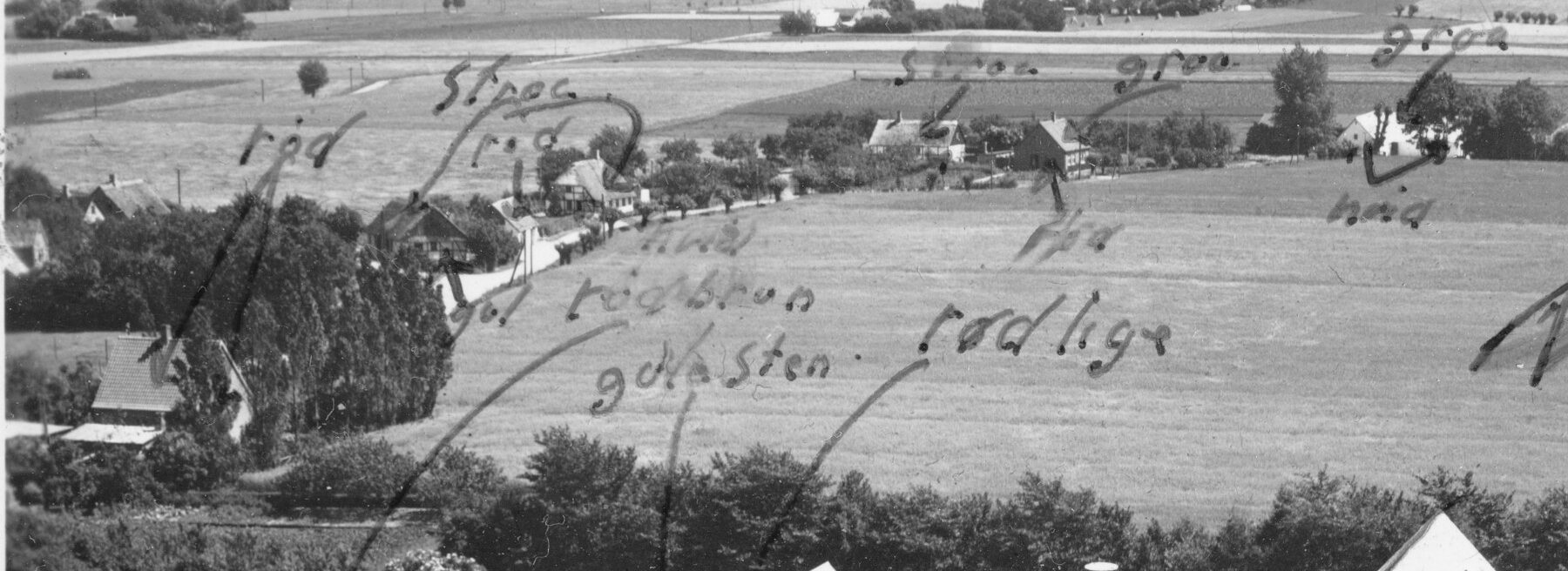
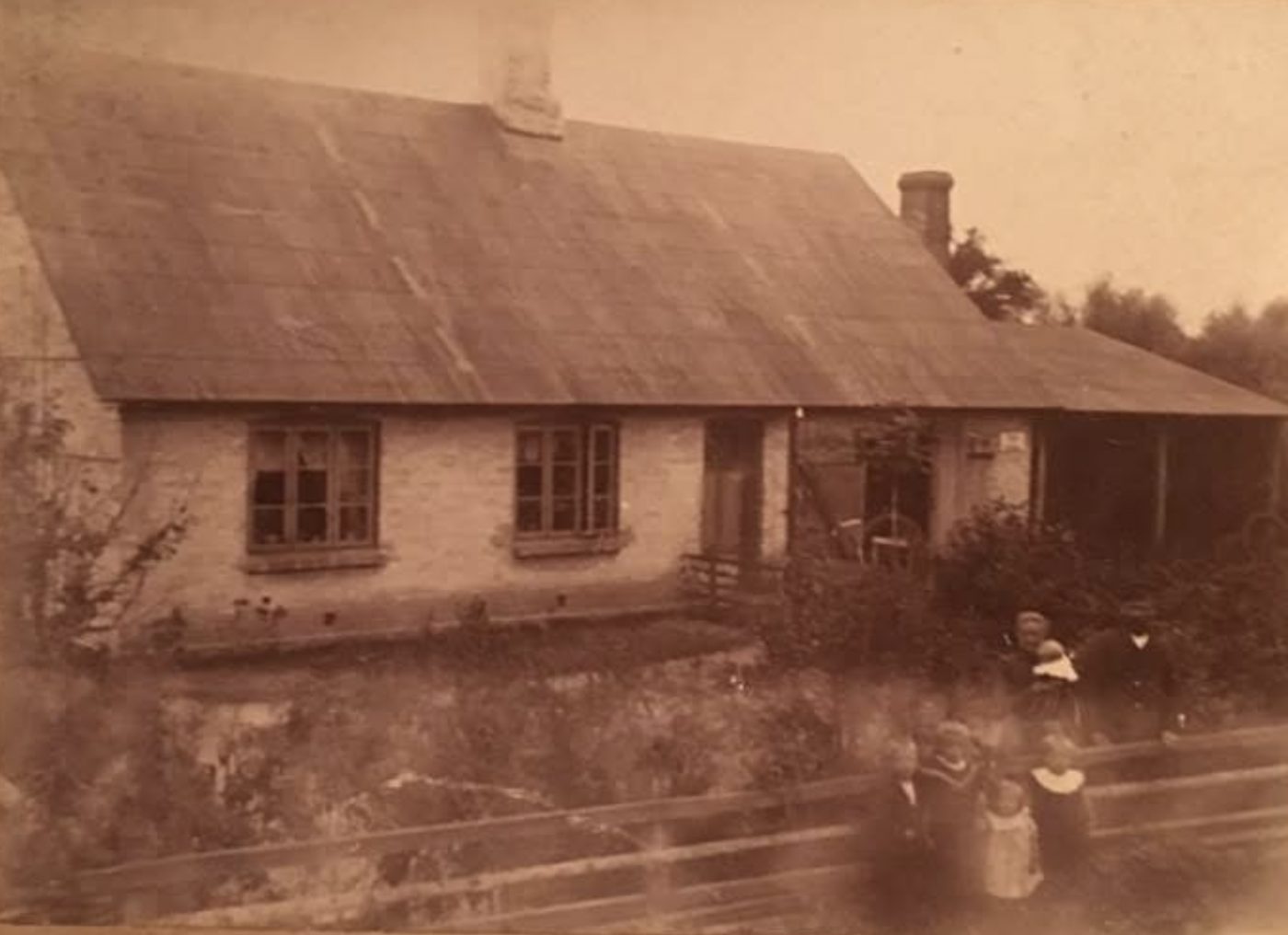
Vægtergården has always had a neighbour across the village pond: the smithy. When the farmers of Byskov built a new cooperative smithy in 1898, it stood on land bought from Hans Vægter - and since the late 1890s my family has lived there. I lived there myself, and my children are the sixth generation in the house.
My great-great-grandfather Laurits
Peder Laurits Jørgensen (1873-1934) was born on 9 July 1873 in Sørup, in Eskilstrup parish, the son of the smith Jørgen Peter Johansen and Else Andersen. He was baptised Lauritz Peter in Eskilstrup Church on 7 September that year - the two names only later swapped places. On 7 November 1897 he married Maren Sofie Rasmussen in Ønslev Church, and in 1898 he came to Byskov as a young smith. On 7 June 1900 he bought the smithy from the village farmers for DKK 2,200. Hans Olsen Vægter was one of those who signed the deed. It was Laurits who heard Hans Vægter shouting from his cellar that he had dropped the tap and was standing with his finger in the hole of the ale barrel. Laurits and his wife Maren Sofie, who herself came from Ønslev parish, had six children.

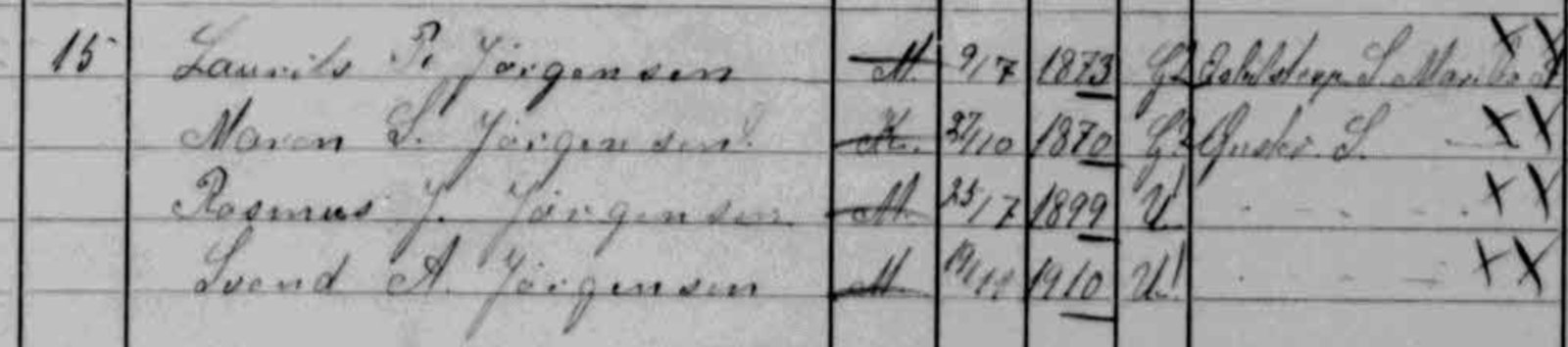
In the 1921 census the smith's family appears in the clerk's looping hand: Laurits, master smith, arrived in the parish in 1898. Maren Sofie, born 1870. Their son Rasmus, born 1899, who was a journeyman smith for his father. And the youngest, Svend Alfred, born on 19 November 1910. The four other children are not on the list.
My great-grandfather Alfred, the smith with the mandolin
Alfred (1910-1994) - whose real name was Svend Alfred - was born in the smithy on 19 November 1910, drove the horse-gin at Vægtergården as a boy and took over the forge in 1934. He played the mandolin by the pond on summer evenings and could still do a handspring at 45. On the bombing night in April 1943, my great-grandmother Karla saw a bomber glide low over the garden; a phosphorus bomb burned just twenty metres from the house. Karla was also the popular cook at the village feasts - including at Sommergaarden in Byskov. (For the record: the Sommer family of Sommergaarden is no relation of mine. The shared name is pure coincidence.) The smithy's vice and weathervane are now at the Danish Tractor Museum in Eskilstrup. Many of the Byskov stories we know today are his: he told them in the early 1990s, when the village began collecting its memories. He died in 1994, but his stories were kept and published in the village book in 2010.
He was baptised in Ønslev Church on 12 March 1911, and among the godparents stood a young woman from the other side of the village pond: Maren Hansine Vægter of Vægtergården - the last Vægter on the farm. So the smith's son had the farm's daughter as his godmother. A little over a hundred years later, his great-grandchild moved into Vægtergården.

My grandmother Bodil and my mother Hanne
My grandmother Bodil was Alfred and Karla's eldest daughter. She went to Ønslev School up to 7th grade - the 1945 school photo lists her as "Bodil Jørgensen, Byskov Smedie". The way to school ran along Byskovvej, where the children played grøftepind - "ditch stick" - jumping back and forth over the ditch and sent an old wheel racing down the road with a stick.
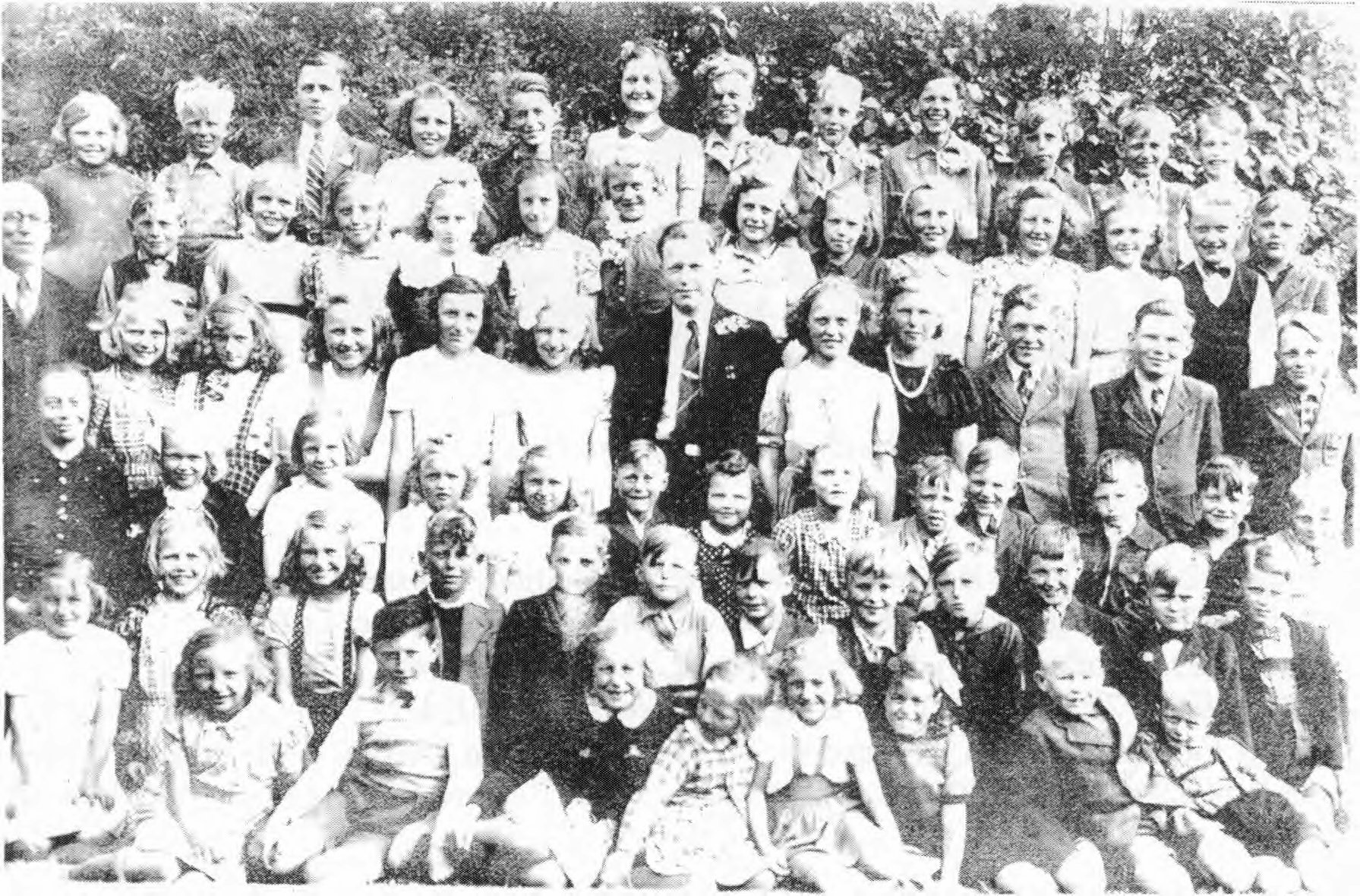
At school she was deeply frustrated by how differently children were treated depending on whether they came from poor or ordinary homes. It went so far that my great-grandfather Alfred had to go up to the school and give the teacher a serious telling-off. My grandmother later described the teacher as "a complete idiot". The Byskov smith did not put up with injustice.
After 7th grade Bodil went into service as a housemaid at Vægtergården and later bought the smithy with my grandfather, Cai Reimann.
She left her mark on Vægtergården in another way, too. In 1987 Hans and Kis had a cow they had named after her: Bodille. She went to the cattle show in Roskilde, and her plaque still hangs in the farm's loft.
Bodil's children played on the farm with Hans and Kis Suhr's children, Anne and Lars - and my mother Hanne and Lars fired 10-øre rockets out of Lars's bedroom window, never discovered until now.
Across the pond
As a child I learned never to go too close to the village pond, because that's where Tang Rasmus lives - a creature from the old tales of Guldborgsund who lies in wait to drag people down into the deep. (Even Crown Prince Frederik was frightened with him aboard the royal yacht.) Whatever they say in Skelby, on Lolland or aboard the royal yacht, the truth is of course that Tang Rasmus lives in the village pond in Byskov. Nobody has ever seen him - because once you've seen him, you're done for. Now we live on the other side of him.
On 5 October 2026, Louise Dalsgart and I moved across the pond into Vægtergården. My mother, Hanne Reimann, takes over the Smithy, which is to stay in the family. After 125 years as neighbours, the smithy and the farm have become one story.
- Lars Sommer, Vægtergården, October 2026