Klodskovvej 70 · Byskov
The farm
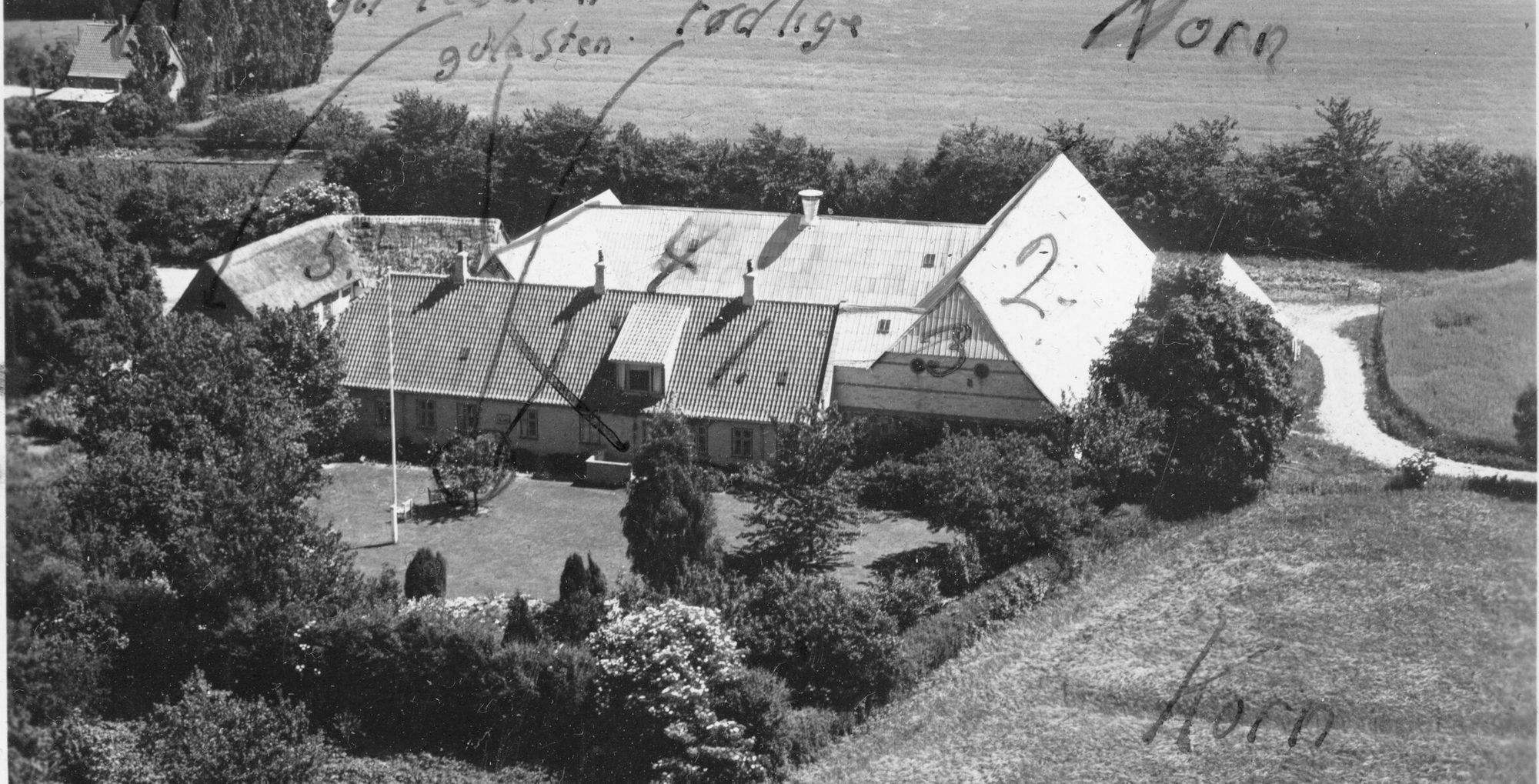
A four-winged farmstead in the middle of the village, with a fieldstone barn, a banquet hall and fields right up to the yard.
Vægtergården is one of the old farms of Byskov - plot no. 5 in the village's cadastral district, in Ønslev parish on North Falster. The post comes via Eskilstrup, but the farm has always belonged to Byskov, and it still stands where it stood before the land reforms: in the middle of the village, with the pond on one side and the smithy on the other.
Four wings
The farm is built around a square courtyard, with remnants of the old half-timbered buildings. The oldest part that can be dated is the barn, built of fieldstone in 1815. The farmhouse was completed in 1863 and is joined to the barn, so you could walk from the kitchen to the cattle without getting your feet wet.
The Mill Room and the castle windows
The farm's banquet hall is called Møllerummet - the Mill Room - probably because a mill for grinding grain once stood there. Its three windows have travelled far: they come from Nykøbing Castle, demolished in 1766, and according to the village book they spent some time in "Mejerigaarden" in Fiskebæk on the way. A fine room for a celebration.
The land
For most of its history Vægtergården farmed about 60 tønder land (some 33 hectares), and it was the only farm in Byskov whose acreage stayed virtually unchanged until recent times. Hans and Kis Suhr added land in the 1980s, but some was sold off again in 1999. Today the farm has 43,749 m² - just under 4.4 hectares - used as paddocks and grazing for the horses.
Vægtergården today
On 5 October 2026, Lars Sommer and Louise Dalsgart took over the farm from Hans and Kis Suhr, whose family had lived here since 1934. Lars's great-grandfather was the blacksmith Alfred Jørgensen from the smithy across the pond.
There are horses in the stables, a sense of community on the farm and every Shrovetide, barrels and children in fancy dress in the barn. Read about DIY livery or see what's in the calendar.