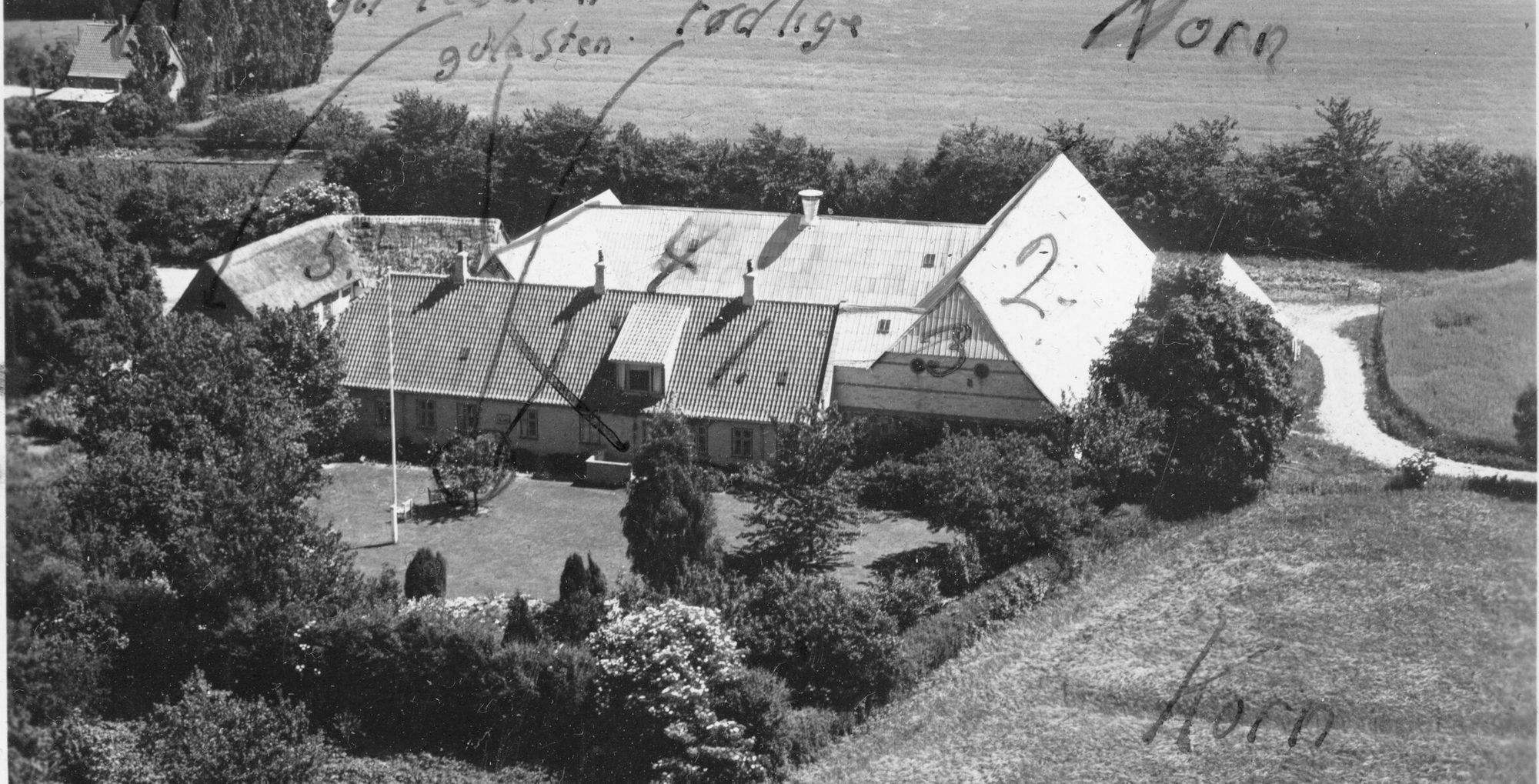
From tenant farm to horse farm
History of the farm
The Vægter family, the parish bailiff who bought the farm free, home-brewed ale in the cellar, the bombing night of 1943 and the evening of liberation.
Most of what we know about Vægtergården comes from local historian Ketty Lykke Jensen's book Byskov - herfra min verden går (2010), which devotes a whole chapter to the farm. Old directories, telephone books, parish records and one wonderful aerial photo add the rest. Sources are listed at the bottom.
Timeline
- 1436 Byskov is first mentioned, as Byskoff.
- c. 1716 Tenant farmer Rasmus Andersen Vægter and his wife Anna Nielsdatter hold the farm. The byname Vægter is known in Byskov from 1688.
- 1766 Nykøbing Castle is demolished. Three of its windows now sit in Vægtergården's banquet hall, the Mill Room.
- 1787-1817 Ole Hansen Vægter is tenant. His daughter marries Hans Larsen - who takes his father-in-law's name at the wedding and becomes Hans Larsen Vægter.
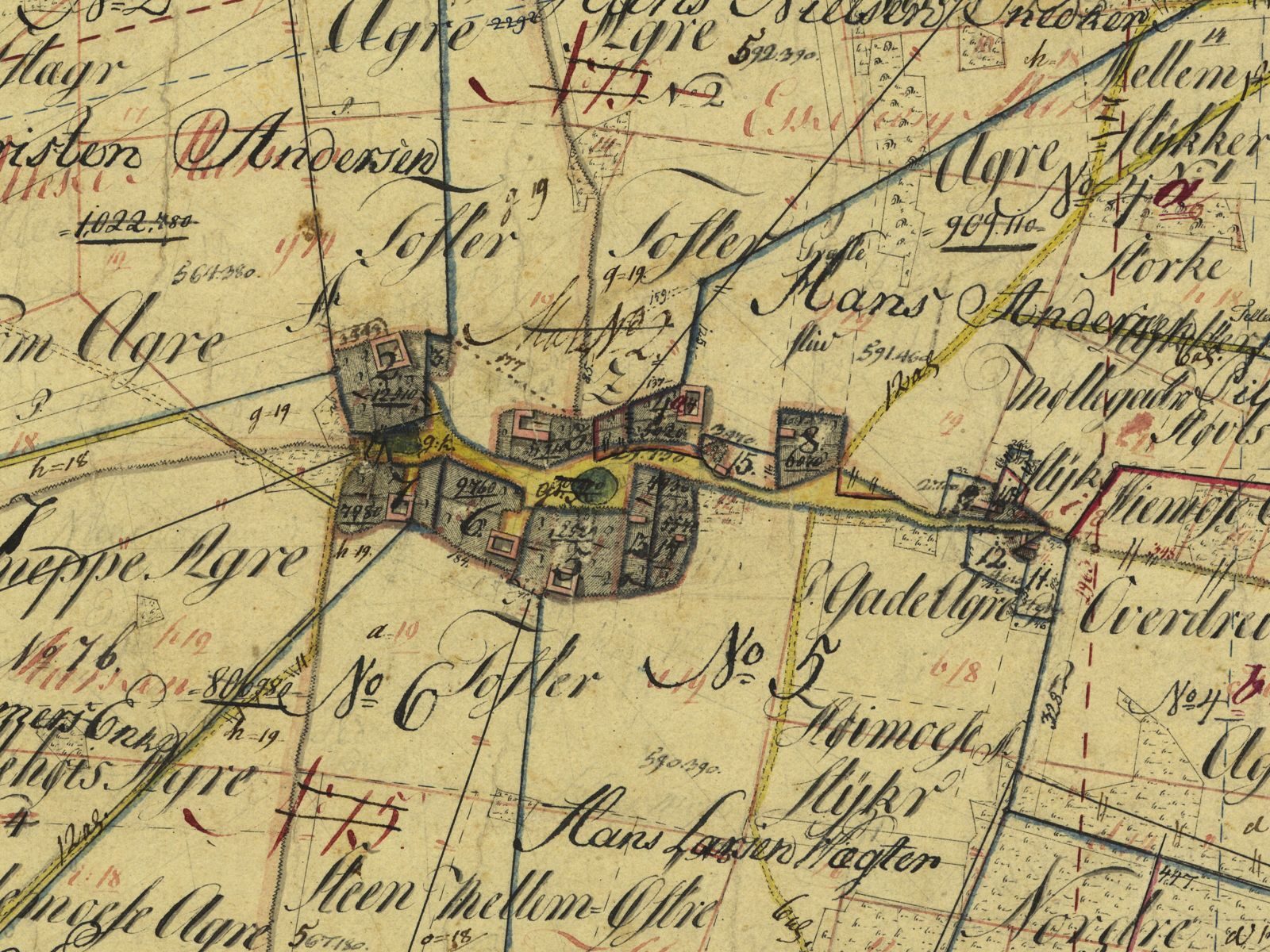
- 1808-15 Byskov's fields are redistributed. Vægtergården stays in the village.
- 1815 The fieldstone barn is built.
- 1855 Ole Hansen Vægter buys the farm free from the manor of Kirstineberg for 5,500 rigsdaler - the first freeholder, and parish bailiff.
- 1863 The new farmhouse is completed.
- 1892 His son Hans Olsen Vægter takes over for DKK 42,000.
- 1905 Vægter becomes an official surname by royal licence.
- 1915 Byskov's first reaper-binder works the fields of Vægtergården.
- 1919 The last Vægter on the farm: daughter Maren Hansine marries Arthur Petersen, who takes over.
- 1922 The name Vægtergaarden is registered on 21 September.
- 1927-34 Four owners in seven years, as the farming crisis sends prices from DKK 107,000 (1929) to 76,000 (1933).
- 1934 Karen and Svend Suhr buy the farm. The Suhr family stays for 92 years.
- 1943 The bombing night: some 300 phosphorus bombs fall over Byskov - one a hundred metres behind the stable, another twenty metres from the Smithy.
- 1952 The farm is photographed from the air.
- 1962 · 1968 Hans and Kis have two children: their son Lars in 1962 and their daughter Anne in 1968. Both grow up at Vægtergården.
- 1972 Their son Hans Suhr, born on the farm in 1938, and his wife Kirsten "Kis" Suhr take over.
- 1982-89 Hans and Kis buy two neighbouring farms. Vægtergården now covers 105 tønder land.
- 1999 Land is sold off. Today the farm has 43,749 m².
- 2026 On 5 October, Lars Sommer and Louise Dalsgart take over from Hans and Kis Suhr. Lars is the great-grandson of the blacksmith next door. His mother, Hanne Reimann, takes over the Smithy, which is to stay in the family.
The blacksmith next door
Vægtergården's nearest neighbour is the smithy by the village pond, built by the farmers in 1898 on land bought from Hans Vægter. In 1900 they sold it to the smith Peder Laurits Jørgensen - Hans Olsen Vægter was one of those who signed the deed.
Around 1915 they still brewed strong ale at Vægtergården. One day, when the smith came over, he heard Hans Vægter shouting from the cellar: "Come and help me, I've dropped the tap and I'm standing with my finger in the hole!"
The story was passed on by the smith's son, Alfred Jørgensen (1910-1994), when the village residents' association collected Byskov's memories in the early 1990s. Alfred had driven the horse-gin at Vægtergården as a boy and took over the smithy in 1934. His daughter Bodil worked as a young housemaid at Vægtergården, and her children later played on the farm with Hans and Kis Suhr's children, Anne and Lars - Hanne and Lars among other things firing 10-øre rockets out of Lars's bedroom window, never discovered until now.
The circle is now closed: Alfred's great-grandson, Lars Sommer, has taken over Vægtergården from Hans and Kis Suhr. Read Lars Sommer's story of the family in the Smithy.
War and liberation
On the night of 21-22 April 1943, Svend Suhr and his wife were walking home from a party when they heard planes heading south. "It's going to be a hot night!" he said - not knowing it would be in Byskov. Read the story of the bombing night.
On 4 May 1945, neighbours were having evening coffee with Karen and Svend Suhr at Vægtergården when the radio brought the joyful news: Germany had capitulated.
The village's party hall
For years, Vægtergården was where Byskov gathered. "That's where it took place when the people of Byskov were to get together, and everyone came with their picnic baskets," one villager remembered. We revive that tradition every year when we invite everyone to Shrovetide at the farm.
For the full story and sources, see the Danish version and the source list.
More stories from Vægtergården
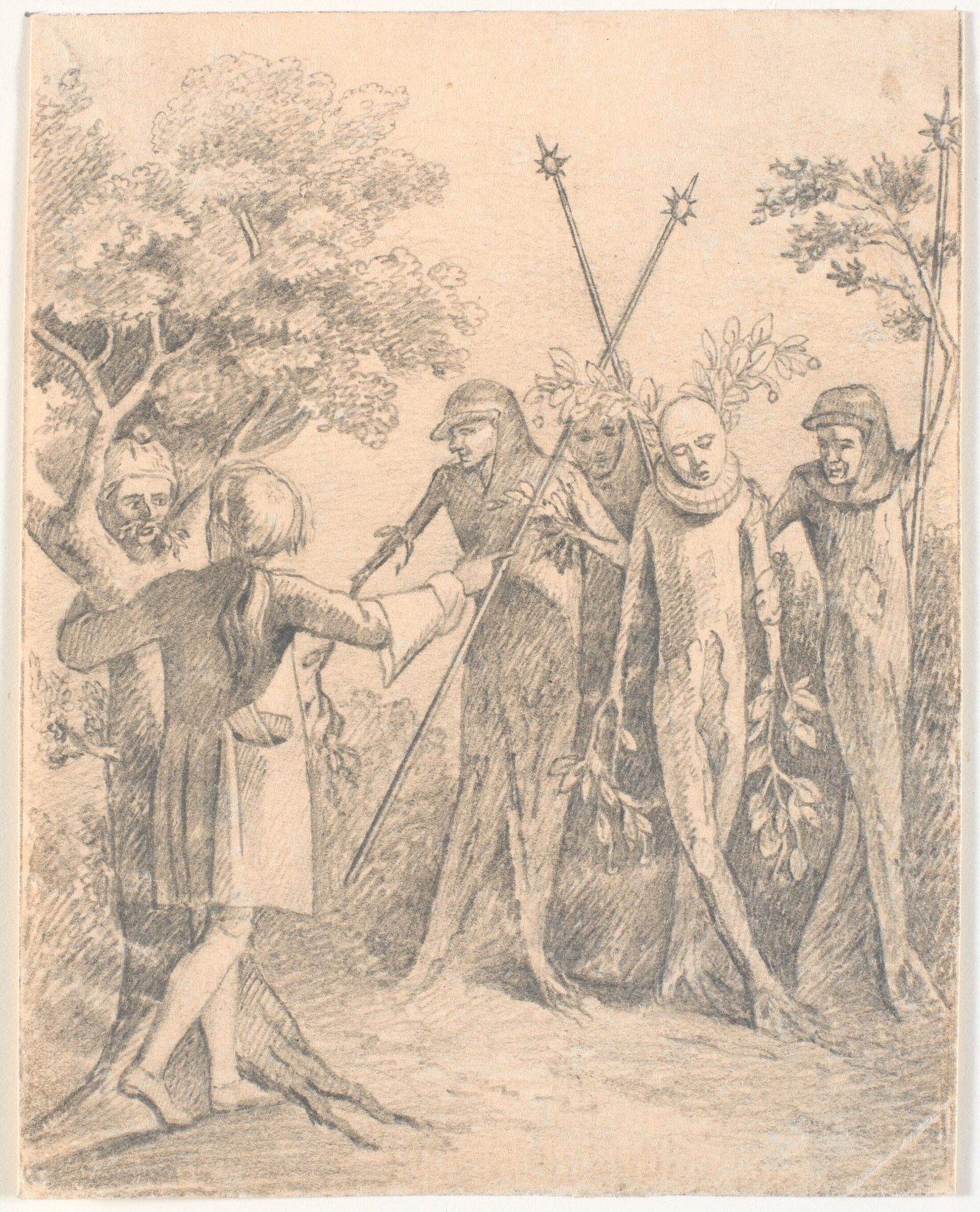 The story behind the name Why Vægtergården?
Two farms in Byskov were bound to supply watchmen to Nykøbing Castle - or so the family's own account of the name goes. Read more →
The story behind the name Why Vægtergården?
Two farms in Byskov were bound to supply watchmen to Nykøbing Castle - or so the family's own account of the name goes. Read more →
 Told by Lars Sommer The Smithy - the neighbour across the pond
My family has lived in the smithy next to Vægtergården for six generations. On 5 October 2026 we moved across the pond. Read more →
Told by Lars Sommer The Smithy - the neighbour across the pond
My family has lived in the smithy next to Vægtergården for six generations. On 5 October 2026 we moved across the pond. Read more →
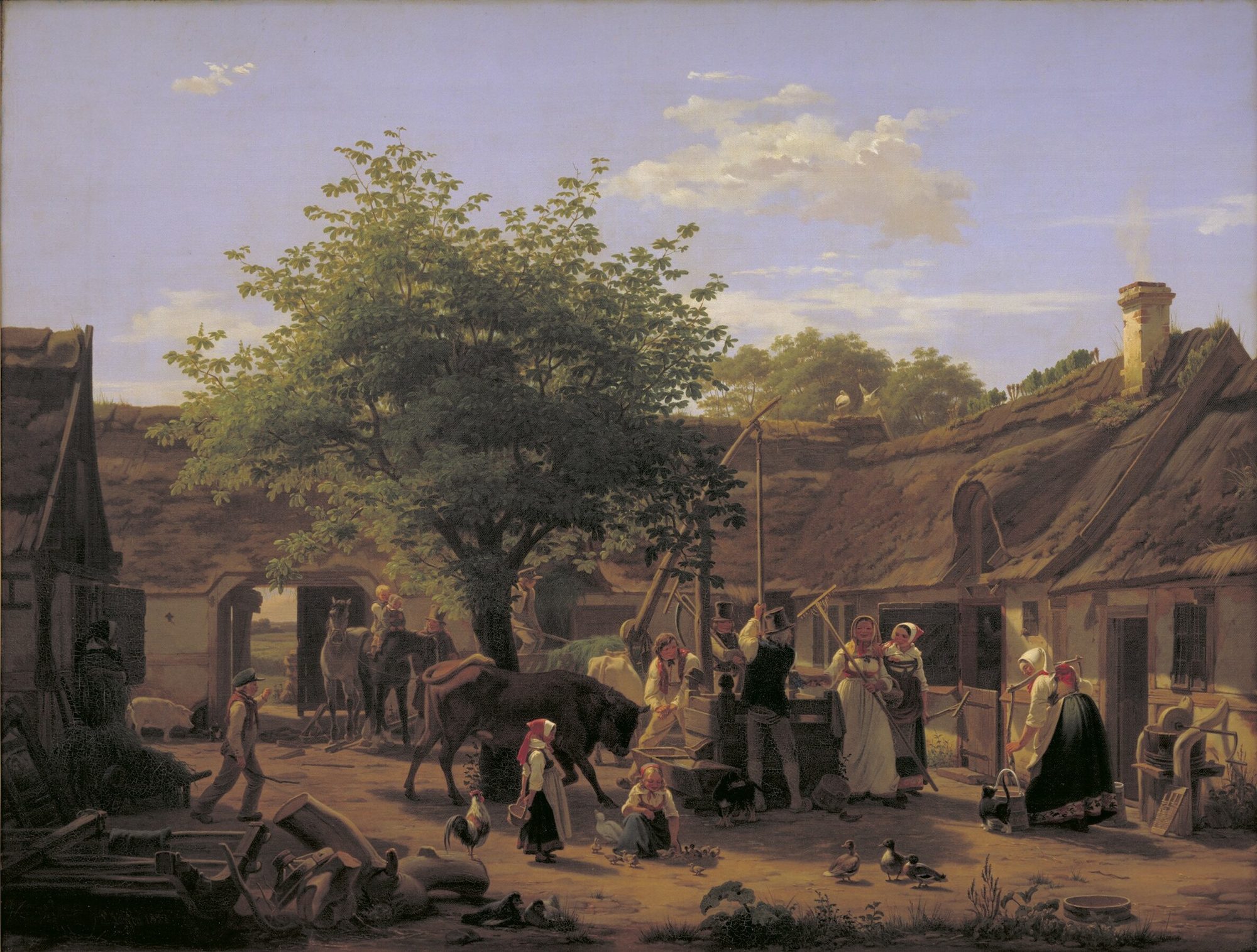 Castle windows, strong ale and dancing till two The Mill Room and the feasts
On the banquet hall with windows from Nykøbing Castle - and the days when all of Byskov came to a party with a picnic basket under the arm. Read more →
Castle windows, strong ale and dancing till two The Mill Room and the feasts
On the banquet hall with windows from Nykøbing Castle - and the days when all of Byskov came to a party with a picnic basket under the arm. Read more →
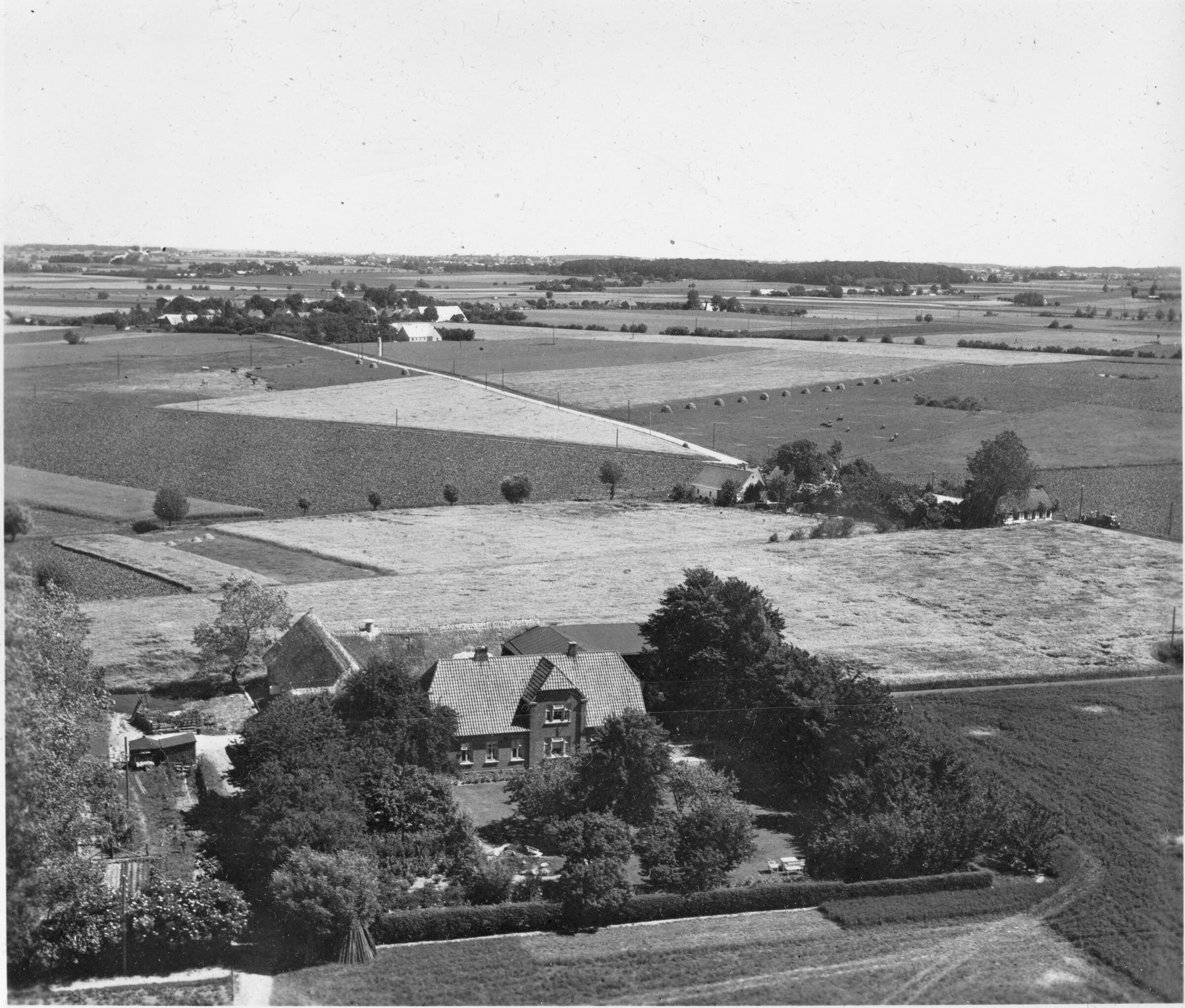 The night of 21-22 April 1943 The bombing night in Byskov
On a moonlit April night some 300 phosphorus bombs fell over Byskov. One burned twenty metres from the Smithy, another behind Vægtergården's stable. Read more →
The night of 21-22 April 1943 The bombing night in Byskov
On a moonlit April night some 300 phosphorus bombs fell over Byskov. One burned twenty metres from the Smithy, another behind Vægtergården's stable. Read more →
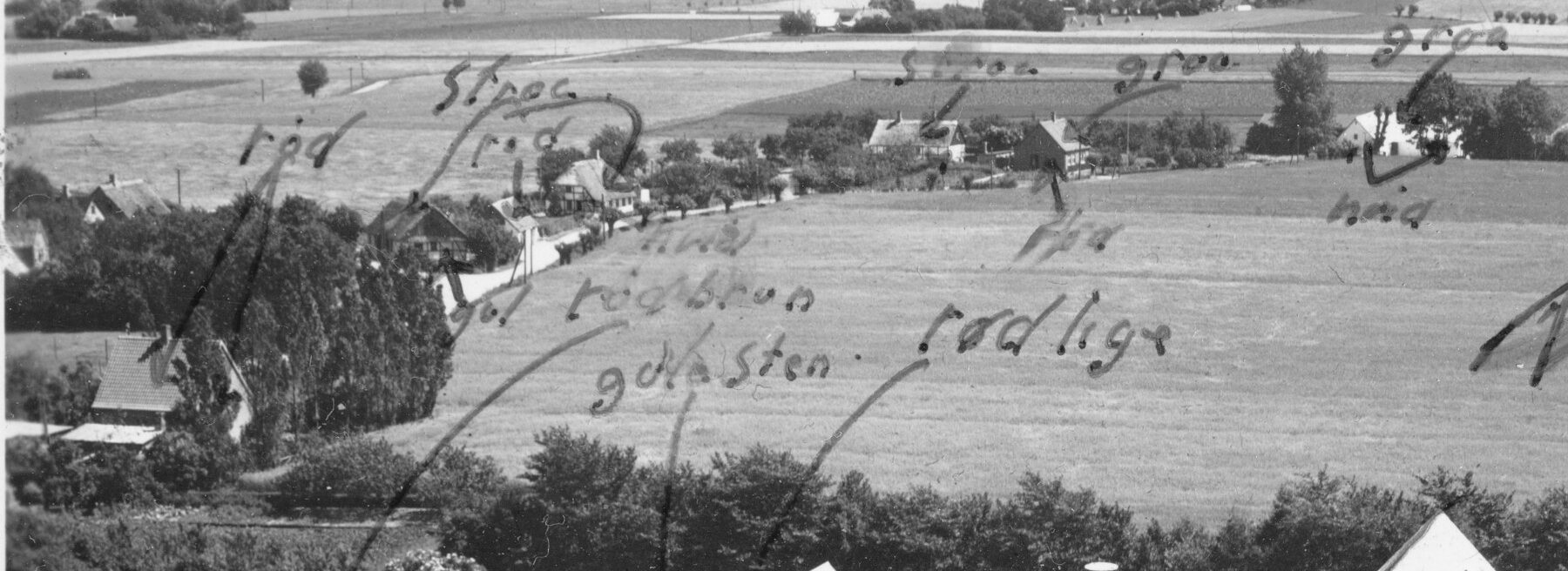
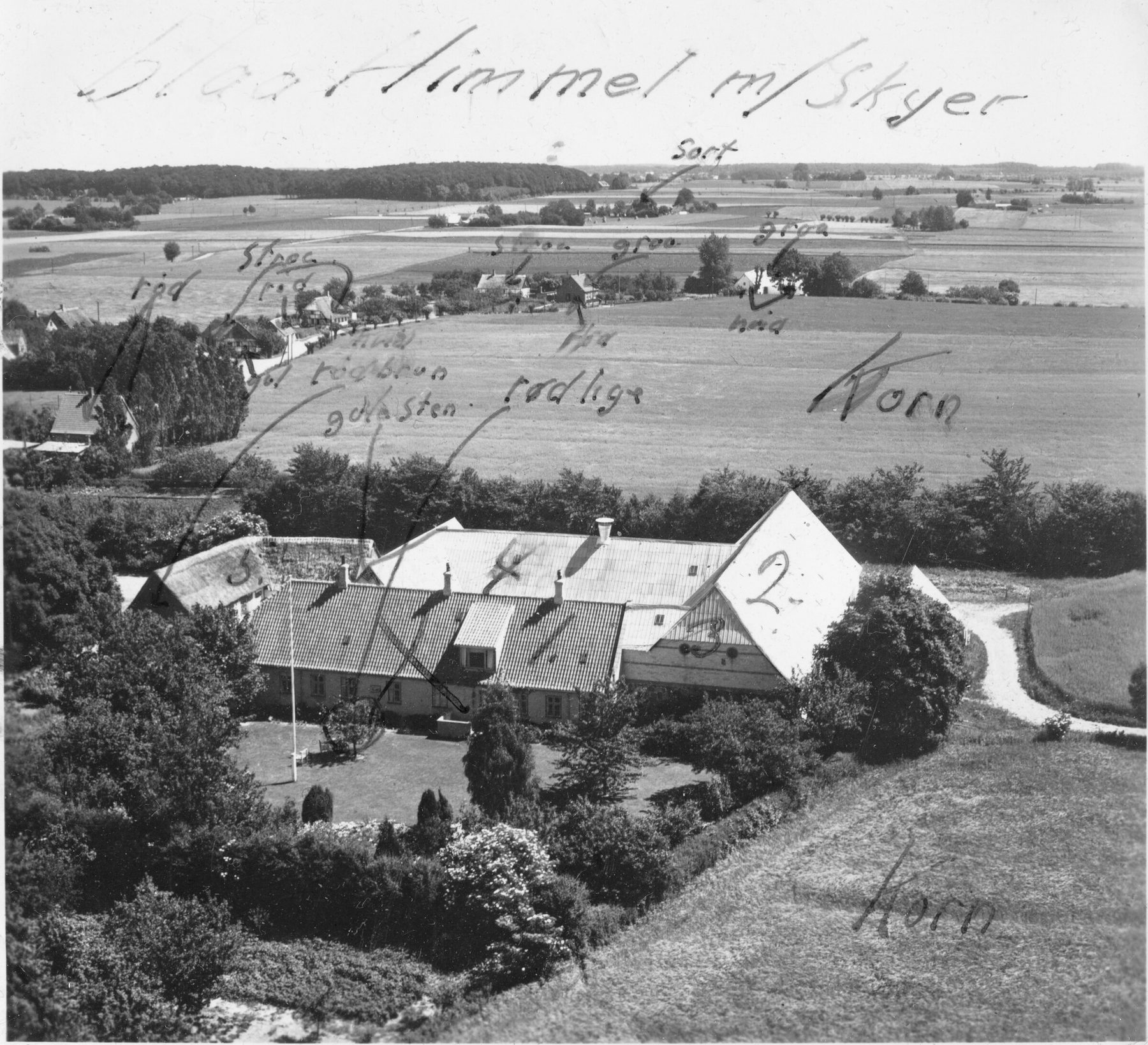 The 1952 aerial photo "Blue sky with clouds"
One summer day in 1952 a photographer flew over Byskov. The picture still carries the notes on which colours the colourist was to paint. Read more →
The 1952 aerial photo "Blue sky with clouds"
One summer day in 1952 a photographer flew over Byskov. The picture still carries the notes on which colours the colourist was to paint. Read more →
 Byskov's most dangerous resident Tang Rasmus in the village pond
He lives in the village pond. Nobody has seen him - because once you have, you're done for. Read more →
Byskov's most dangerous resident Tang Rasmus in the village pond
He lives in the village pond. Nobody has seen him - because once you have, you're done for. Read more →
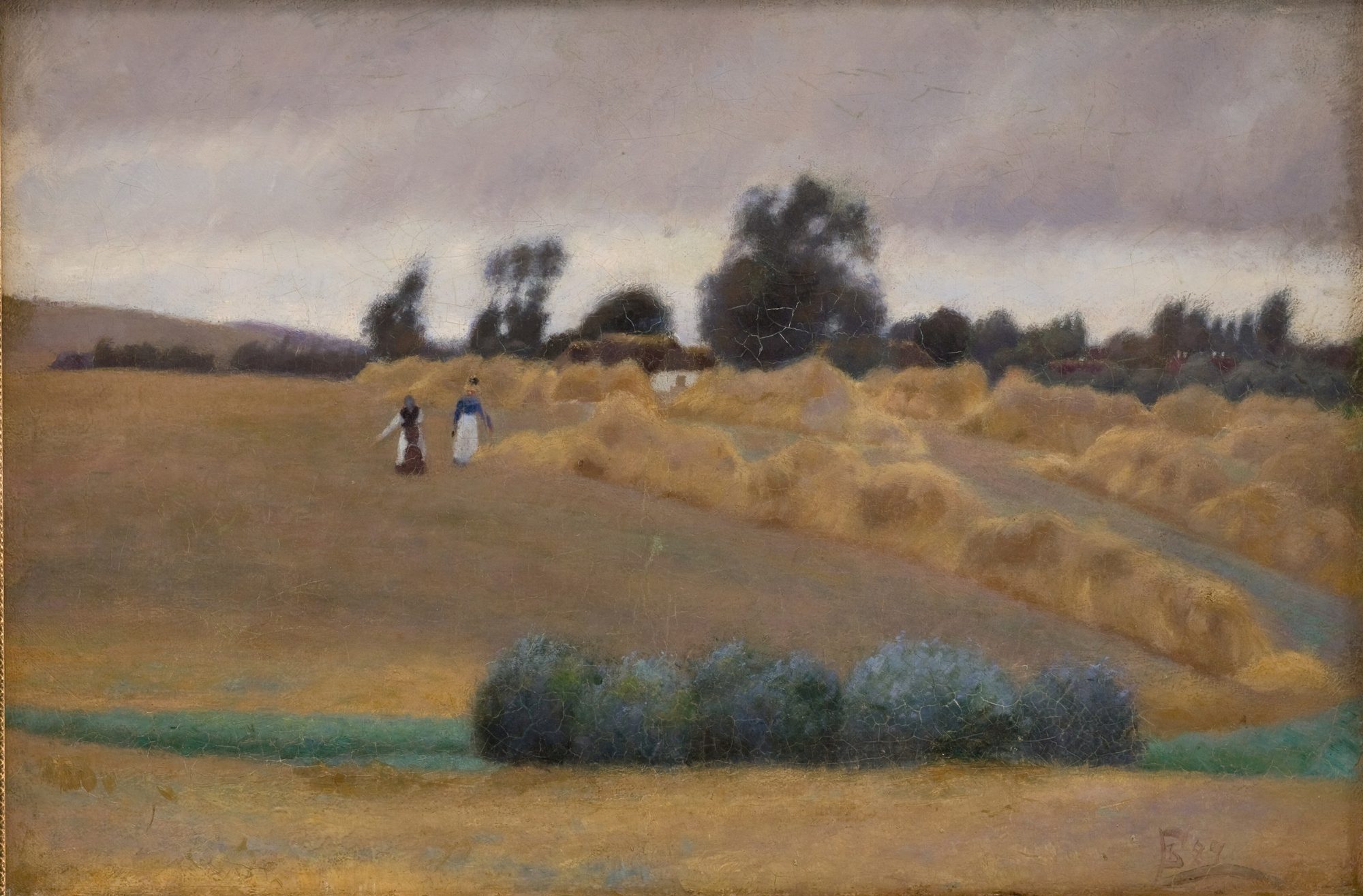 Roast badger, the village bull and a seed drill in flames Small Stories from Byskov
Small and large moments from a little village - gathered from letters, memoirs and the minutes of the residents' association. Read more →
Roast badger, the village bull and a seed drill in flames Small Stories from Byskov
Small and large moments from a little village - gathered from letters, memoirs and the minutes of the residents' association. Read more →
 North Falster The village of Byskov
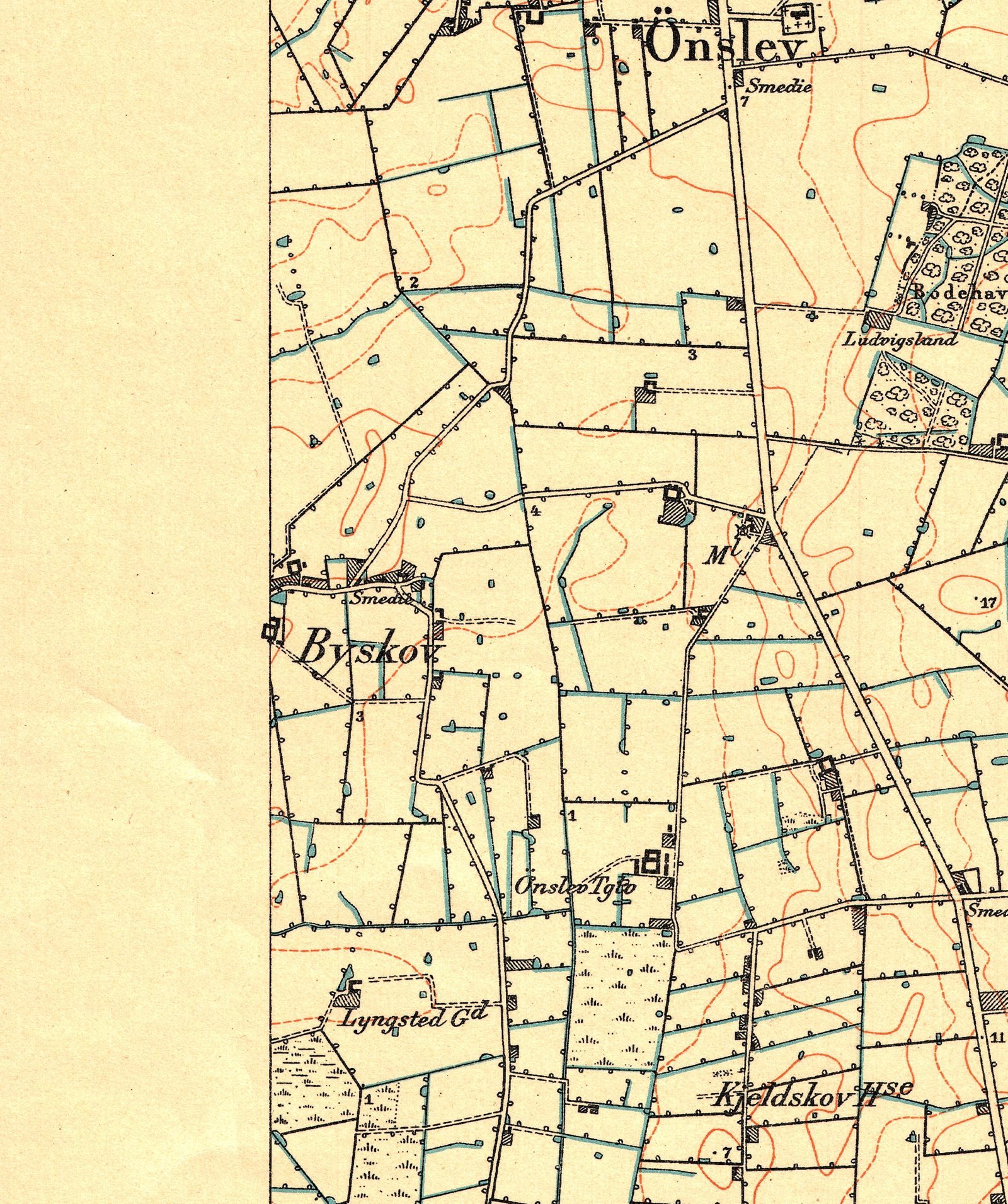
Village pond, cooperative smithy, the road to school, a royal cavalry school and legends of nisser and elle-folk - the village around Vægtergården. Read more →
North Falster The village of Byskov
Village pond, cooperative smithy, the road to school, a royal cavalry school and legends of nisser and elle-folk - the village around Vægtergården. Read more →