Castle windows, strong ale and dancing till two
The Mill Room and the feasts
On the banquet hall with windows from Nykøbing Castle - and the days when all of Byskov came to a party with a picnic basket under the arm.
The castle windows in the Mill Room
The farm's banquet hall is called Møllerummet - the Mill Room - probably because a corn mill once stood there, and it holds three windows from Nykøbing Castle. In the 1600s the castle served as a dower residence for queens, but was demolished in 1766. According to the village book, the windows spent time along the way in "Mejerigaarden" in Fiskebæk before coming to Vægtergården. A fitting fate for a farm whose name, according to family tradition, comes from its duty to supply watchmen to that very castle.
"I'm standing with my finger in the hole"
Around 1915 they still brewed gammeløl - strong home-brewed ale - at Vægtergården. Hans Vægter was a big, powerfully built man, and every day he walked down to the smithy by the pond to ask if they fancied a glass of beer. One day, when the smith Laurits Jørgensen came over, he heard Hans Vægter shouting up from the cellar:
"Come and help me, I've dropped the tap and I'm standing with my finger in the hole!"
The tap had popped out of the ale barrel in the dark cellar. The story was passed on by the smith's son, Alfred, when Byskov's residents' association collected the village's memories in the 1990s. As a boy, Alfred had driven the horse-gin at the farm - and today his great-grandson owns Vægtergården. Read Lars Sommer's story of the family in the Smithy.
The village's party hall
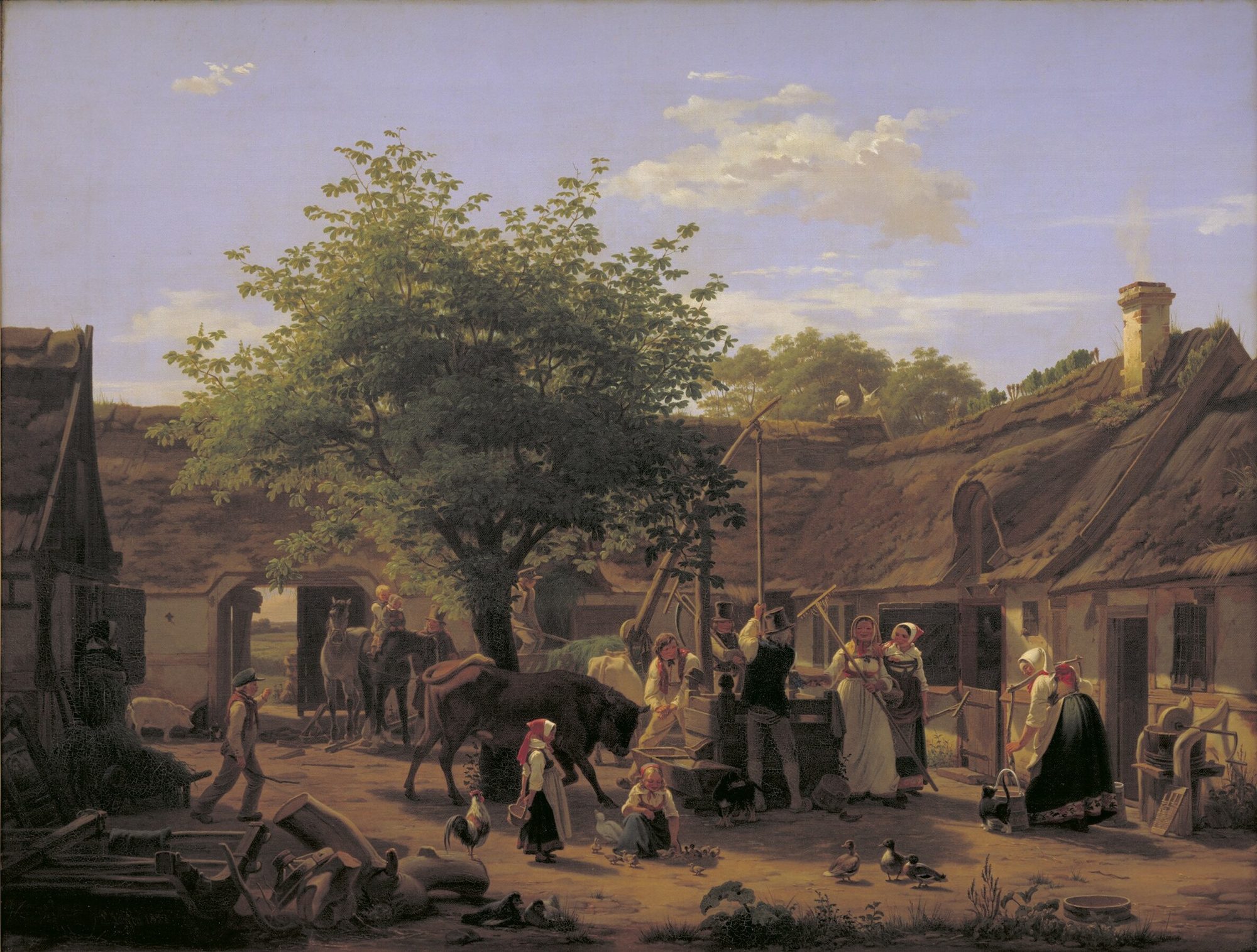
For many years Vægtergården was the place where Byskov gathered. One old villager remembered: "We'd sometimes go there for a party, because that's where it happened when the people of Byskov were to come together about something, and everyone brought their picnic baskets." There were silver weddings with Egon Madsen's four-man band, and around 1960 Karen Suhr started a sewing and social club.
Byskov has always known how to celebrate. The farmers of Byskov and Klodskov held their gammelgilde - the old harvest feast - and in a letter from September 1888 one of the village's young people tells how, after a long day's harvesting, they danced until two in the morning. The feast was held in the hall of the other Vægter farm, which had the largest hall in Byskov and Klodskov. Read about it under The Watchmen.
We revive that tradition every year when we invite everyone to Shrovetide at the farm.
Sources: Ketty Lykke Jensen, Byskov - herfra min verden går (2010), pp. 37, 120-124, and the letters and memoirs at the back of the book.